Questions
frequently asked
What do you do all day?
We balance our day between prayer, work and ministry. Each morning and evening we adore the Blessed Sacrament in Holy Hour. We also have daily Mass, Rosary and Divine Mercy Chaplet. We pray Morning, Evening and Night Prayer of the Liturgy of the Hours in common. Several times a week we have time set aside for praise and intercession. In addition, each sister has time set aside for work, ministry, domestic duties, study, formal community recreation, informal fraternal time with sisters, exercise and personal time, as well as monthly days of prayer and solitude.
Training of the new sisters takes place at the motherhouse along with formation classes, ministry and various work and domestic duties. In the mission houses sisters pray and spend significant periods of time each day in work and ministry among the poor, college age students, the sick, the elderly and those in need of evangelization.
What is the Liturgy of the Hours (or Divine Office)?
The “Liturgy of the Hours” or Divine Office is the official prayer of the Church, and is prayed by consecrated people, priests, religious and many lay people. It is an extension of the Liturgy of the Holy Sacrifice of the Mass, and reaches out to intercede for all the needs of humanity and God’s people in a continual way. It sanctifies the hours of the day by prayer and praise to God.
"Give up that which you want to know for the One who wants to tell you."
-Fr. Dave Pivonka, T.O.R.

Why do Sisters wear a habit (a special dress)?
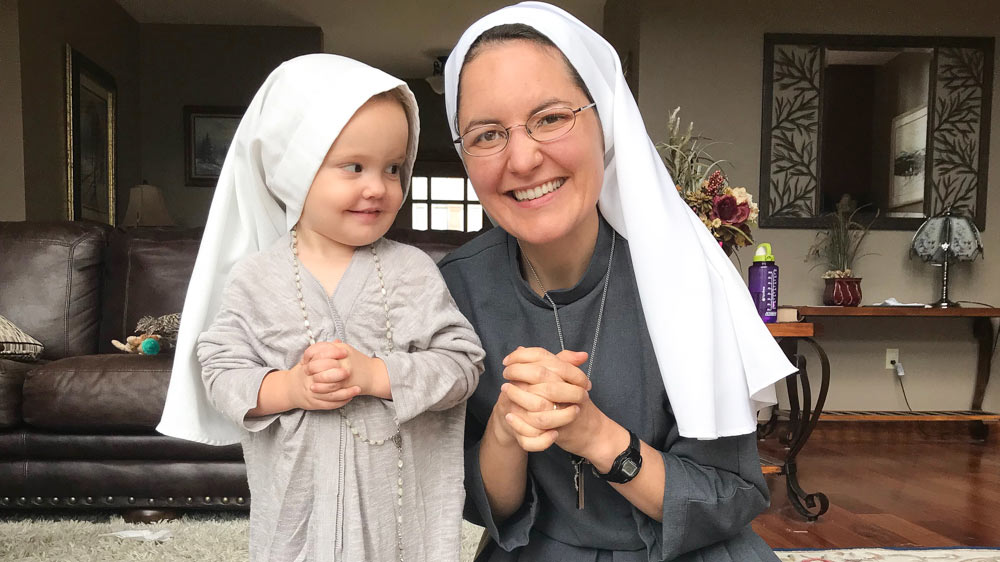
The habit is an outward sign of an inward consecration to God, and identifies us as members of a particular religious order in the Church. The habit and veil are, in a sense, our wedding garments, since we are signs of the Church as “Bride” of Christ. The religious garb is a sign that one is ‘set apart’ by God as a consecrated or holy offering to God for the salvation of all humankind.
Like a public uniform that identifies one as a policeman or nurse, so our religious garb publically identifies us as servants of the Gospel, welcoming others to approach us for aid, prayer and service of their spiritual and temporal needs. Our dress reminds us and others that we are sisters to all, for we are all one family under God, the Father and Creator of all. We seek always to give glory to God by our manner of acting and by our dress, so as to be signs of God’s living presence in the world.
Our habits and veils are made in the motherhouse convent. We are assisted in this work by an employee and volunteer.
Do you have an exercise habit?
Yes we have a separate habit for exercise and heavy manual work. It consists of a short veil, white polo shirt and culottes. You will see photos of this exercise habit on our website! We exercise 4 times a week by walking, running, hiking, playing team sports and occasionally swimming. We have permission to attend a local park for free where we can paddle-board and canoe.
"“The seed of my vocation...was planted in the soil of my heart and yet hidden from my own sight. Long before I was able to admit it, even to myself...I think I always knew I was called. But I was not ready to know... I was not ready to freely choose and joyfully embrace a call to religious life.”
-Sr. Clare Matthiass, CFR
Is a college degree required?
While we are open to women discerning with our community who don’t have undergraduate degrees, in general we encourage women to complete a degree before entering our community. If a woman does not have an undergraduate degree, her ministry options within community will be more limited in light of the fact that the universities at which we serve require sisters serving in a pastoral capacity to have such a degree. College campus ministry is a significant form of ministry for us. However, we do engage in a variety of ministries and having an undergraduate degree is not essential for all the ministries and works that we do.
We do not accept applicants with outstanding debt or loans. Today, women have various options for fundraising to help them pay off their debts or loans in order to be ready to enter a religious order. For example, the Laboure Society assists applicants in paying off educational loan debt.
What is your application process?
- A woman fills out the inquiry form in order to contact the vocation director and set up a time to talk.
- She attends a Vocation Discernment Retreat weekend to learn more about consecrated life, discernment and our community charisms and way of life.
- She asks to do a Come and See visit, which is between 4 – 8 days, to live our way of life alongside us. She may do multiple Come & See visits.
- She is interviewed by sisters in the community.
- She undergoes psychological testing by a psychologist in the area.
- A variety of references and records are provided to the community, including records of education, employment and health. She also undergoes medical and dental testing.
- If the applicant is accepted, she prepares to enter in August that year.
If you are interested in our community vocationally please contact our Vocations Coordinator by clicking here.
What are the stages of Formation and Commitment?
- Postulancy: Following the application process and acceptance the woman enters the postulancy program and begins to wear a religious garb. This is a 1-2 year period of training in community which includes an introduction to our life of prayer, work, and ministry. This stage is characterized in a primary way by vocational discernment.
- Novitiate: Upon entering novitiate, the novice receives a more distinct religious garb, a veil, and a religious name. It is a two year period of more concentrated study, prayer, and times of solitude. This provides an environment conducive to continued discernment and testing of one’s vocation.
- Temporary Profession of Vows: The Church stipulates a 3-6-year period, at the beginning of which the sister professes temporary vows of chastity, poverty, and obedience. She renews them each year. The sister wears the habit of the community and is fully engaged in our life of prayer, work, and ministry. It is a time of both continued discernment, and more intentional testing to see if one is well suited for making a lifetime commitment to the congregation.
- Perpetual Vows: This entails a life-long commitment to living the vows of chastity, poverty, and obedience. At the Mass of profession the sister receives a wedding ring.
For more information visit our formation page.
"I beg you... to have patience with everything unresolved in your heart and try to love the questions themselves as if they were locked rooms or books written in a very foreign language. Don't search for the answers, which could not be given you now, because you would not be able to live them. And the point is, to live everything. Live the questions now. Perhaps then, someday far in the future, you will gradually, without ever noticing it, live your way into the answer.”
-Rainer Maria Rilke
How do you express contemplative and charismatic prayer in the community?
Our contemplative prayer includes two Eucharistic holy hours in the morning and evening of each day, as well as communal vocal prayer of the Liturgy of the Hours three times each day. Our charismatic prayer includes praise and worship and intercession several times a week, periodic prayer meetings in which the charismatic gifts of the Holy Spirit are expressed, and other occasions of praying over each other.
What is your apostolate?
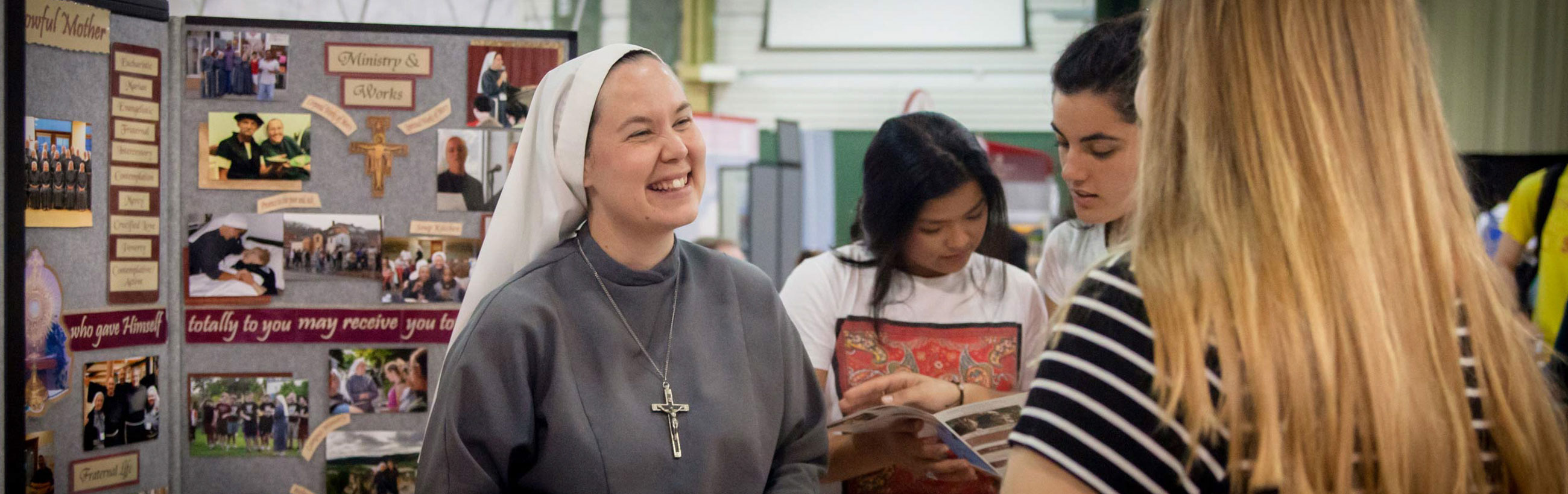
Our time is divided between prayer, work and ministry. Our apostolate (mission and ministry) is ‘to make known God’s merciful love’ by spiritual and corporal works of mercy among the poor, the sick, and those in need of evangelization. We minister among the poor of our local area in the Samaritan House Thrift Store and Emergency Food Bank as well as at LAMP soup kitchen. We are also involved in college campus ministry at Franciscan University of Steubenville main campus and at their study abroad program in Gaming (Austria) as well as at Florida State University in Tallahassee, Florida. We give parish missions and retreats. We also offer vocations and youth programs, we speak at conferences and events, and we host events at our Motherhouse in Toronto, Ohio for spiritual enrichment.
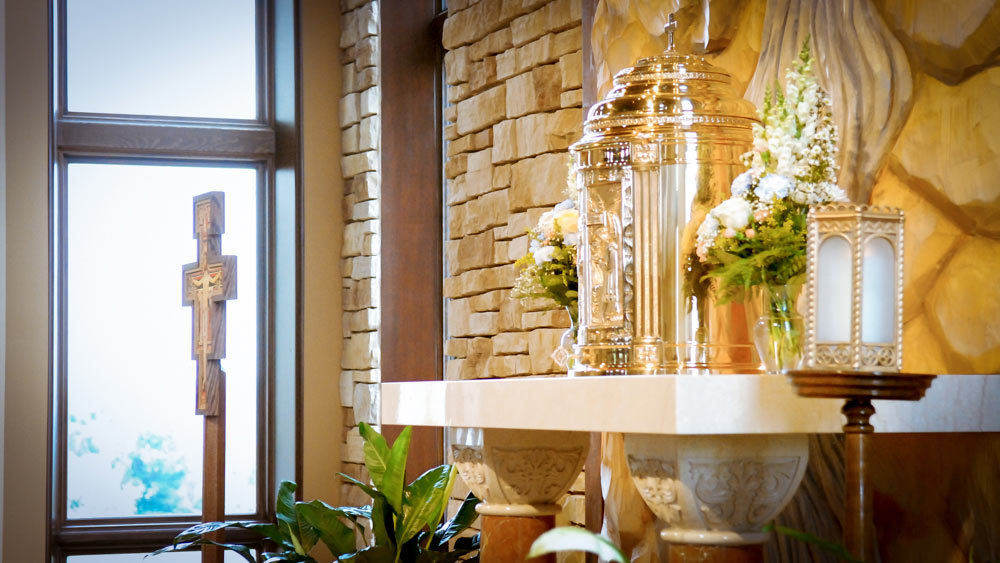
"When you approach the tabernacle, remember that He has been waiting for you for twenty centuries.”
-St. Josemaria Escriva
How often can a sister visit with her family?
Each sister can make monthly calls to family, write regularly and visit her family for two weeks each year. In addition to this, a sister’s family may visit her at our Motherhouse two weekends each year. A sister can also write periodically to friends and receive letters from them.
Our community embraces the family members and loved ones of our sisters to whom we owe a significant debt of gratitude. We are very conscious of the fact that the greater physical separation from a daughter or sister who enters religious life is felt as a very real sacrifice. We are grateful for the example, love, support and prayers of our families, especially our parents, and we intercede frequently for the needs of our family members, as well as for the needs of all of those that are entrusted to us.
Our "For the Families" page is specifically dedicated to family members of women who are discerning or have entered religious life.
If family members have particular questions about our way of life that are not answered in the pages of our website, we welcome hearing from you! Please contact the Vocations Coordinator by calling the main motherhouse number or send an email through the "Contact Us" page.
What do you do for fun?
Each sister is different! But we do enjoy outdoor activities, bonfires, indoor board games, hiking, sledding on our property in the winter, reading, watching the occasional movie, lighting a fire in the wood burning stove and chatting around it, skits and seasonal fruit picking in our orchard. We also try to avail of local cultural and educational events that are free or of nominal cost.
"This is the meaning of the call to the consecrated life: it is an initiative coming wholly from the Father (cf. Jn 15:16), who asks those whom he has chosen to respond with complete and exclusive devotion."
-Vita Consecrata 17
How do you fast and live penance?
Our penance includes the discipline of our way of life and our vows of poverty, chastity and obedience. It also includes simple food, furniture and décor, sharing all things in common, permissions for the use of things, fasting twice a week on bread and water and a non-meat protein, if needed. We also avoid tea and coffee except for special feast days and joyfully accepting whatever assignment is given to us for work and ministry.
How do I know if I have a religious vocation?
Typically there is deep peace, increasingly strong interest and desire, and awareness that one is being ‘invited’ to follow Christ by giving herself entirely to Him as a bride. If one is truly open to this possibility and is praying regularly and receiving the sacraments, then there is usually a growing sense that this call or invitation to embrace a consecrated life would be the greatest way to fulfill one’s purpose and mission in life, and to grow in holiness and in love of God and neighbor.
