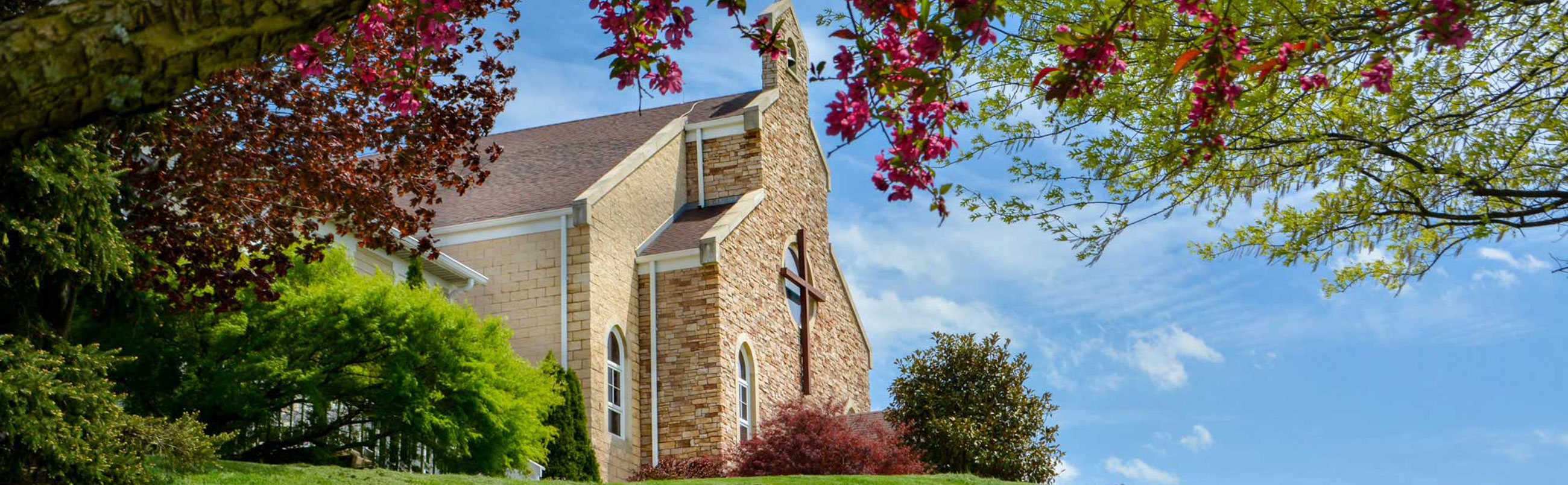
Father of Mercy Chapel
come to the bosom of the Father
Father of Mercy Chapel is where our sisters spend three to five hours each day in prayer, joining Mary at the foot of the cross, in communion with Christ’s offering of intercession, reparation and atonement, and in thanksgiving, praise, and adoration of God. Most importantly, it is where our sisters receive Jesus daily in the Most Blessed Sacrament. The Chapel is the most significant place in the lives of our sisters and the place where we receive the source of grace that enables us to be continually transformed by our Beloved Crucified to become vessels of mercy and grace for others.
Father of Mercy Chapel was dedicated on August 1, 2010 to honor our Heavenly Father, who loved us so much that He sent His only Son to become man and dwell with us.
We welcome visitors and pilgrims to Father of Mercy Chapel, and we pray that those who enter her sacred doors will come to experience the merciful love of the Father through Christ’s love outpoured for them. Through God’s loving presence, Father of Mercy Chapel is a place of healing, transformation and strengthening in Christ. May those who pray in this sacred place become vessels of God’s Mercy for the building up of Christ’s Church on earth! May Christ’s words to Francis from the San Damiano Cross be fulfilled in each of us: “Francis, go rebuild my Church …”
Architectural Design
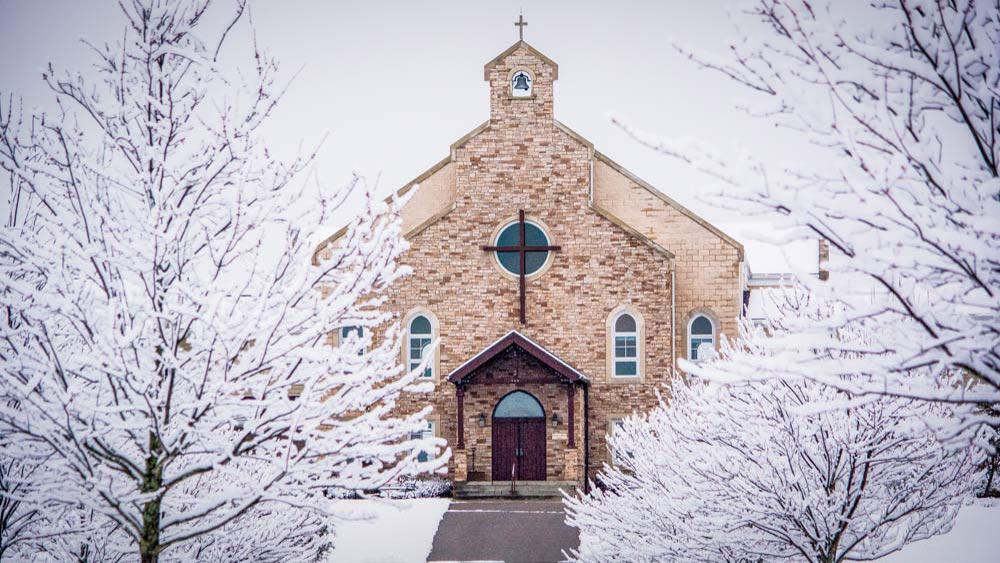
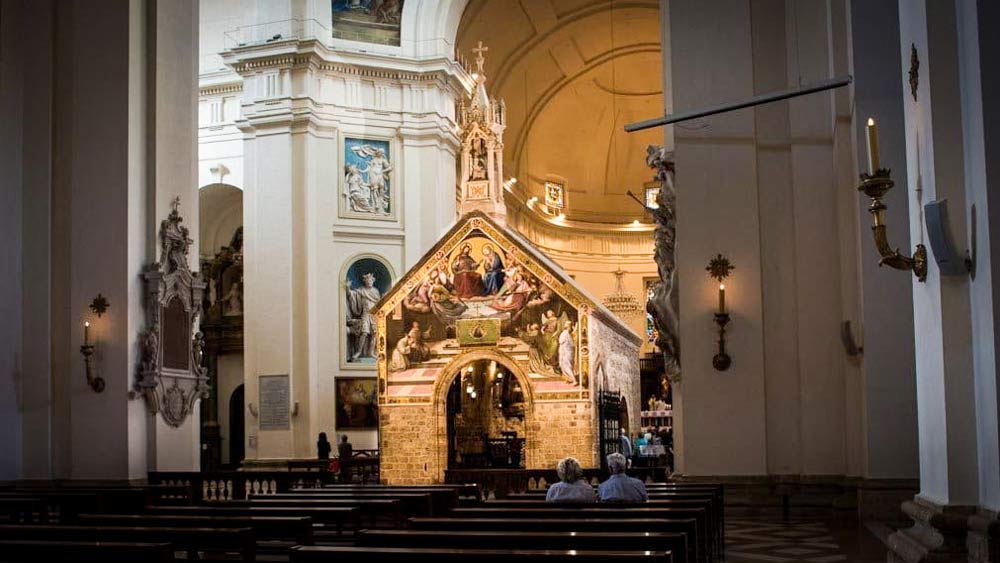
The exterior of Father of Mercy Chapel was designed to resemble Our Lady of the Angels Chapel near Assisi, Italy, affectionately known as the Portiuncula (Little Portion). The Portiuncula Chapel is significant to our community because it is one of the chapels that St. Francis rebuilt and the birthplace of the Order of Friars Minor. This “Little Church” also holds great significance to the founding of the Franciscan Sisters, T.O.R. As the Holy Spirit was working to bring the original sisters together to form our community, a replica of the Portiuncula was being constructed on the campus of Franciscan University of Steubenville. On the day of our founding, August 15, 1988, the Solemnity of the Assumption, our community celebrated Mass at the campus’ Portiuncula.
.jpg?1568487070)
- 1
- 2
- 3
" See to it my sons, that you never abandon this place [the Portiuncula]. If you are thrown out of one door, go back through another, for this is truly a holy place, and the dwelling place of Christ and His Virgin Mother."
-St. Francis of Assisi
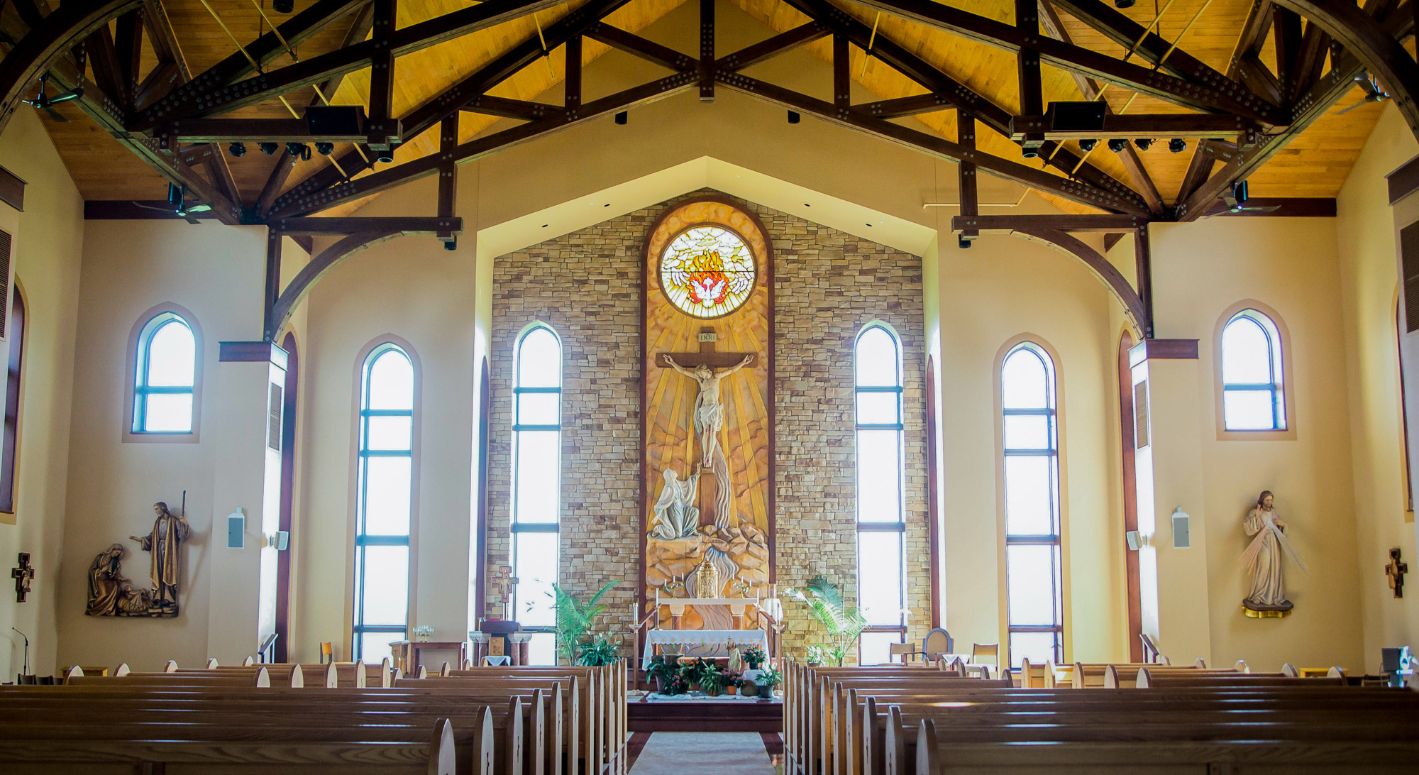
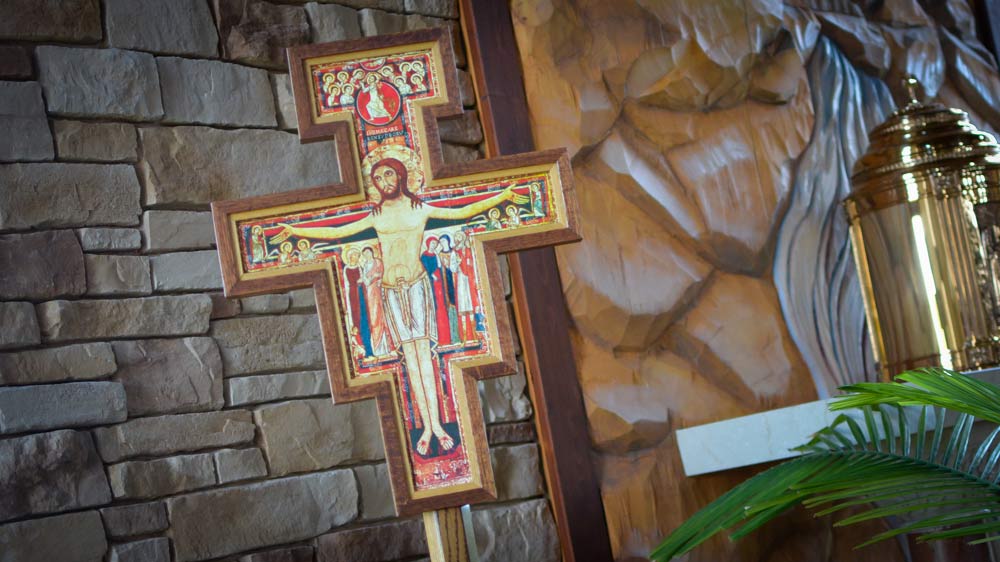
The interior of Father of Mercy Chapel was designed to be the center of our Motherhouse complex because the Eucharist is the center, source and summit of our life. The floor plan resembles the San Damiano Cross, the cross from which Christ spoke to St. Francis, calling him to rebuild the Church. The cross widens at its center to include those who accompanied Jesus in His passion. Each pew is marked by the San Damiano Cross, signifying that we are with Mary and John at the side of the Cross, not mere bystanders. In a similar way, it provides the backdrop for our 14 Stations of the Cross, inviting us not to just pray the stations as onlookers, but to truly be with Jesus in His passion so that we can learn to have compassion on those who suffer.
The San Damiano Cross is significant for Franciscans because it is this Cross from which Christ spoke to St. Francis: “Francis, go and repair my house which, as you see, is falling into ruin.” It conveys the presence of our loving Father, depicted by the Hand coming down from heaven in blessing His beloved Son. This cross portrays Christ Jesus as both crucified and glorified, uniting us to Christ in His death and resurrection. His blood is seen falling upon John, Mary and the others who accompanied Him at the cross.
The artwork in Father of Mercy Chapel flows from our Franciscan spirituality. It begins and ends with the Trinity and highlights the life of Jesus and Mary and their powerful roles in uniting us to God here on earth and in the fullness of Trinitarian life with Him forever in heaven.
Rose Window
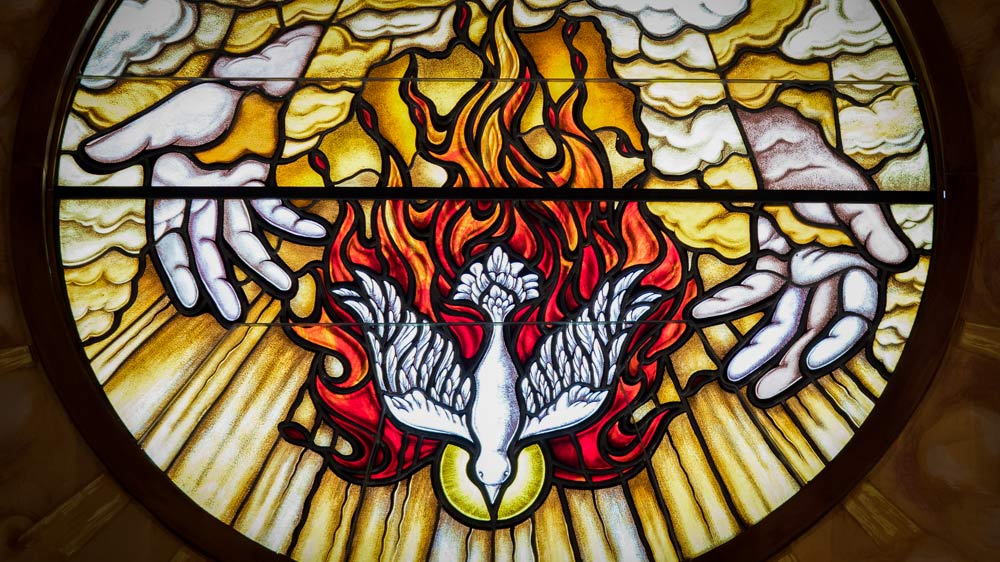
The Father of Mercy, portrayed in the two hands reaching down, showers His love and grace upon us. These are the same hands that create us, love us and restore us to Himself through the gift of His Son in His Incarnation, Passion, Death and Resurrection and the outpouring of the Holy Spirit. The dove and the fire represent the Holy Spirit, the love of God.
" With great trust, we beg the Father of our Crucified and Risen Lord to open the floodgates of His mercy. Our foundresses knew from the beginning that the call and mission entrusted to us was only possible through relying on the guidance and power of the Holy Spirit."
-CONSTITUTIONS 1 & 13
Nativity Scene
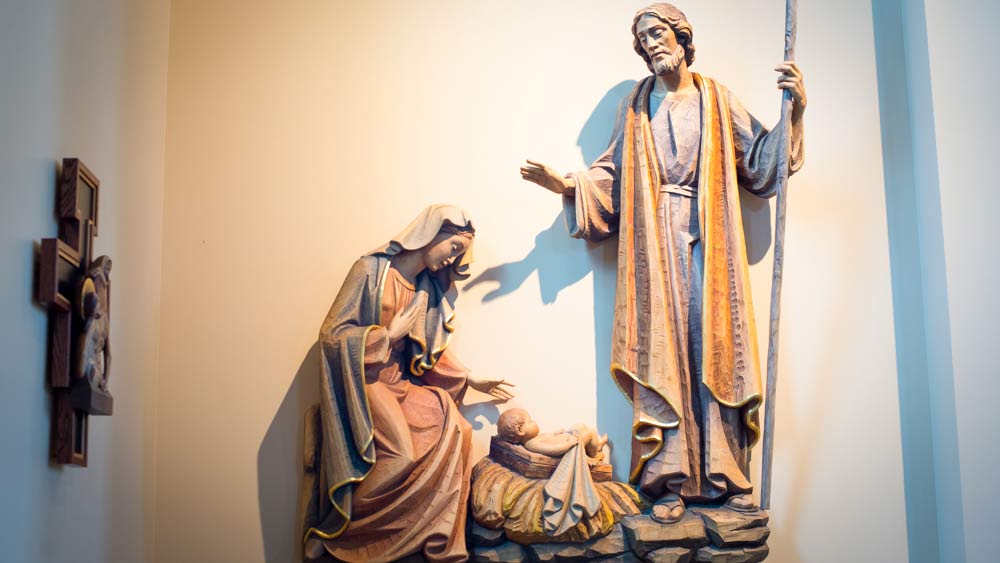
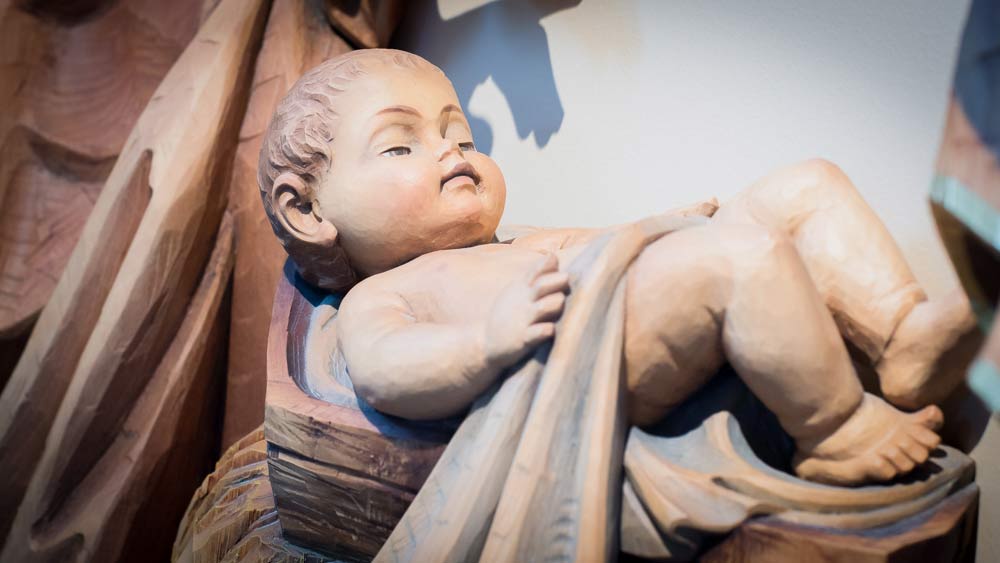
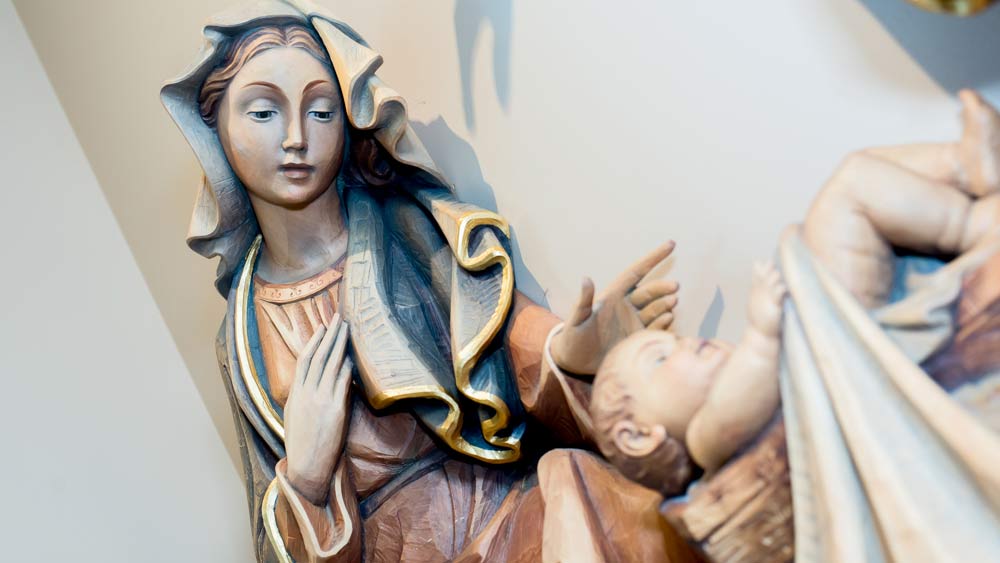
As Franciscans, we treasure the nativity scene in a particular way. St. Francis was in awe that God would send His only Begotten Son to become man so that we could become one with Him. In 1223 in Greccio, Italy, Francis, in the abundance of his great love for Christmas, created a live manger scene—complete with ox and ass—to welcome the Christ Child. When the town gathered to see the scene, one onlooker saw a small baby boy in the crib, whom Francis tenderly held. Ever since, displaying a crib scene has been a popular way of celebrating the wonder of Christmas in churches and homes throughout the world.
"St. Francis decided to celebrate the memory of the birth of the Child Jesus at Greccio...he had a crib prepared, with hay and an ox and an ass...the friars were all invited and the people came in crowds. The forest re-echoed with their voices and the night was lit up with a multitude of bright lights, while the beautiful music of God's praises added to the solemnity. The saint stood before the crib and his heart overflowed with tender compassion; he was bathed in tears but overcome with joy."
-Major Life of St. Francis by Bonaventure, 10:7

- 1
- 2
- 3
- 4
Photo Credit: Simple Heart Photography
Passion Scene
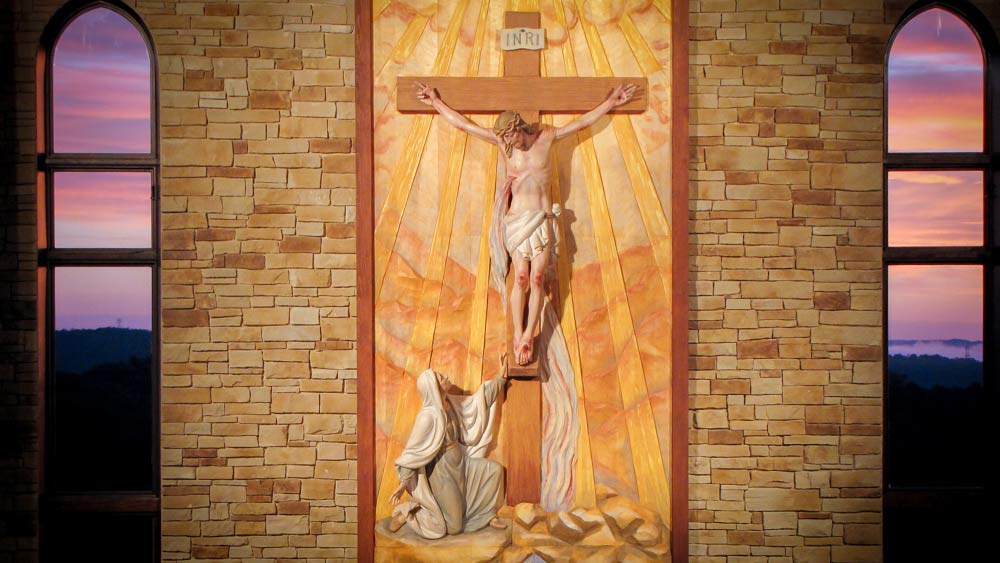
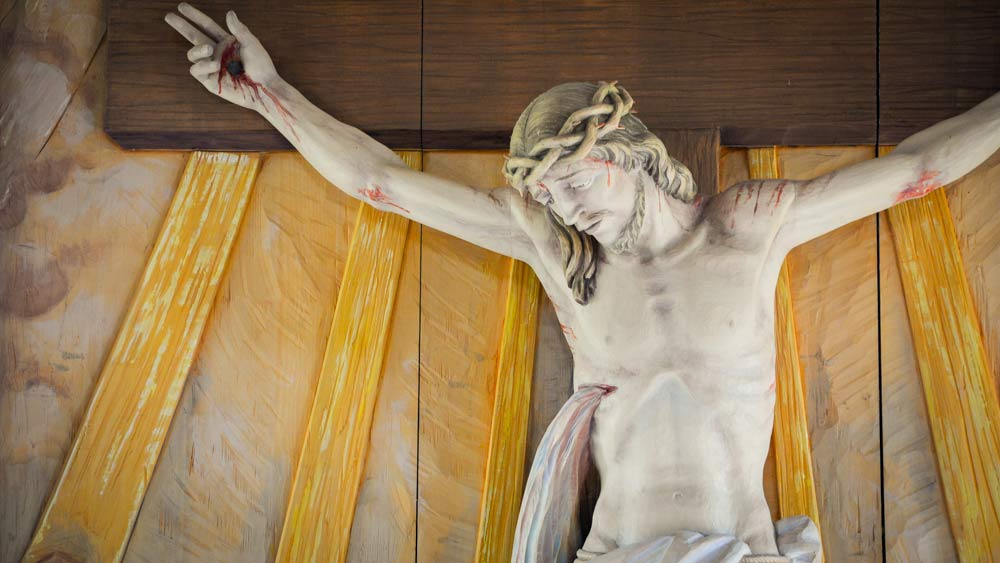
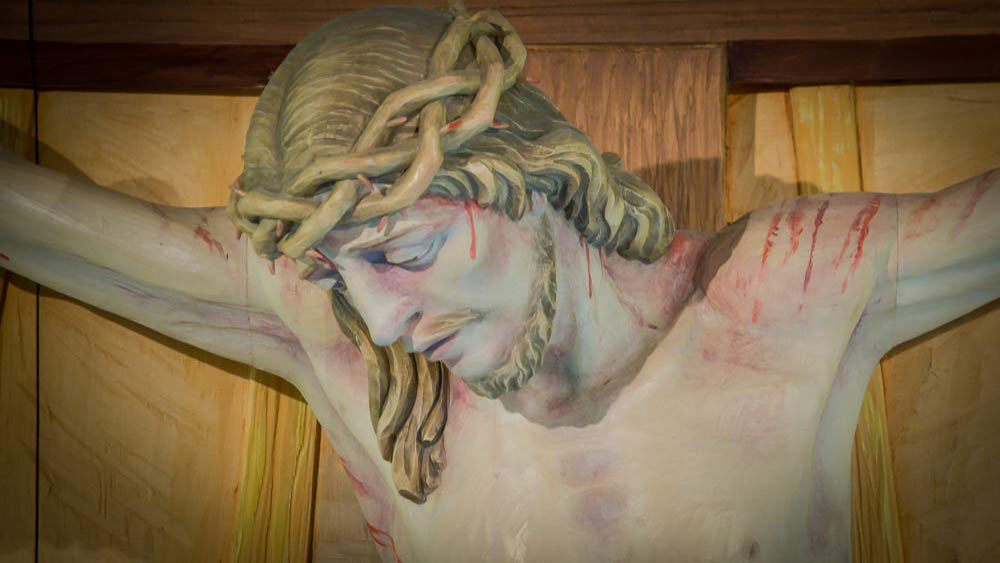
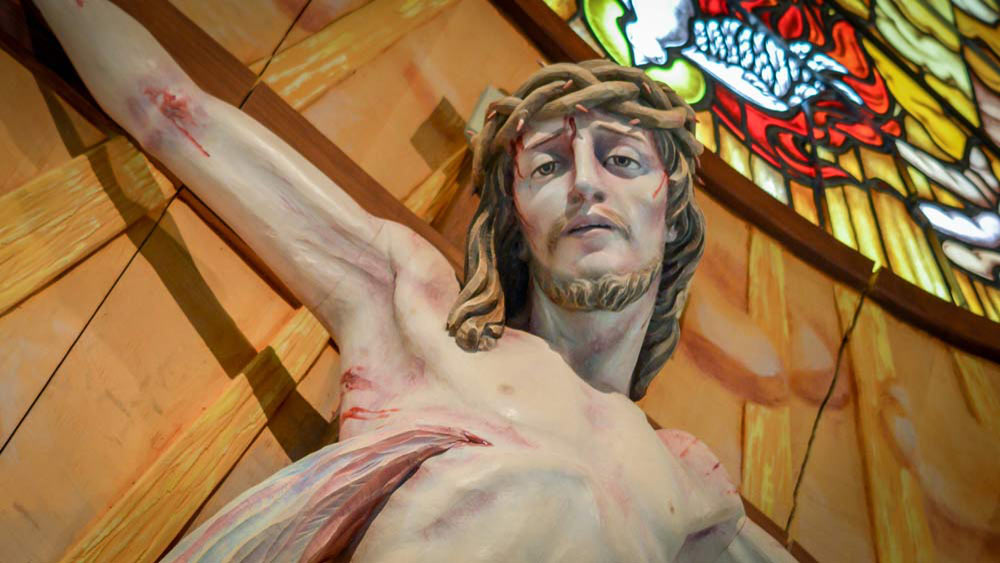
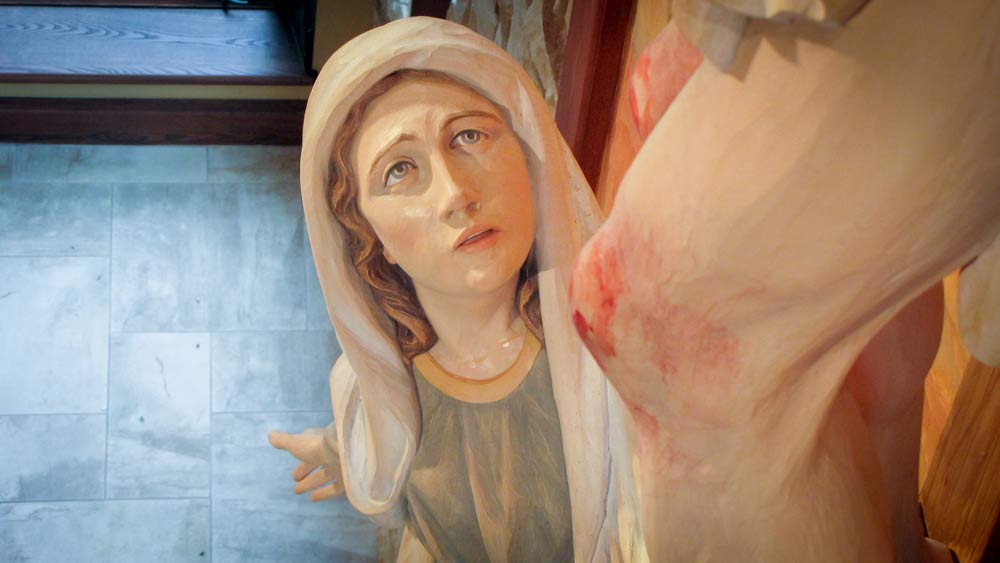
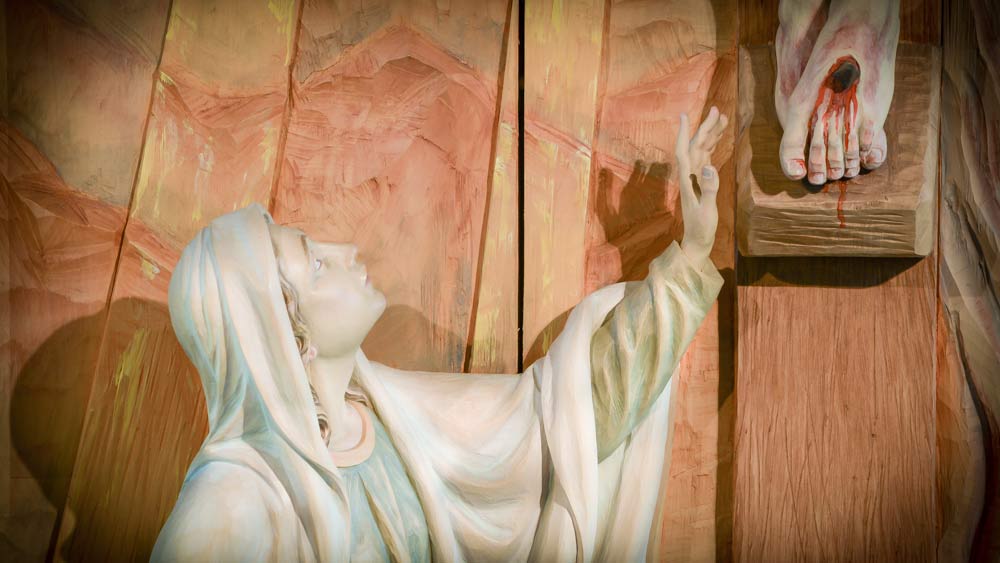
The Paschal Mystery—the passion, death and resurrection of Christ—is the center of our Catholic faith. The wood relief behind our altar not only depicts the suffering Christ, but also His victory over death and sin. From the Fathers of the Church until the present, the blood and water flowing from the side of Christ has represented the streams of our salvation and the birth of the Church and the Sacraments. The blood and water is the mercy of God, which we receive most profoundly in Baptism, Reconciliation, and the Eucharist. The wood relief portrays the passion scene found in chapter 19 of St. John’s Gospel, when Mary and John join Jesus at the foot of the cross. Our spirituality as Franciscan Sisters, TOR is to be with Mary at the foot of the cross, receiving and giving God’s Merciful Love. Mary welcomes us to join her there, extending her arm out to us and guiding us to enter into the gaze of her Son.
- 1
- 2
- 3
- 4
- 5
- 6
"Now since it was preparation day, in order that the bodies might not remain on the cross on the sabbath, for the sabbath day of that week was a solemn one, the Jews asked Pilate that their legs be broken and they be taken down. So the soldiers came and broke the legs of the first and then of the other one who was crucified with Jesus. But when they came to Jesus and saw that he was already dead, they did not break his legs, but one soldier thrust his lance into his side, and immediately blood and water flowed out."
-John 19:31-34
Divine Mercy Image
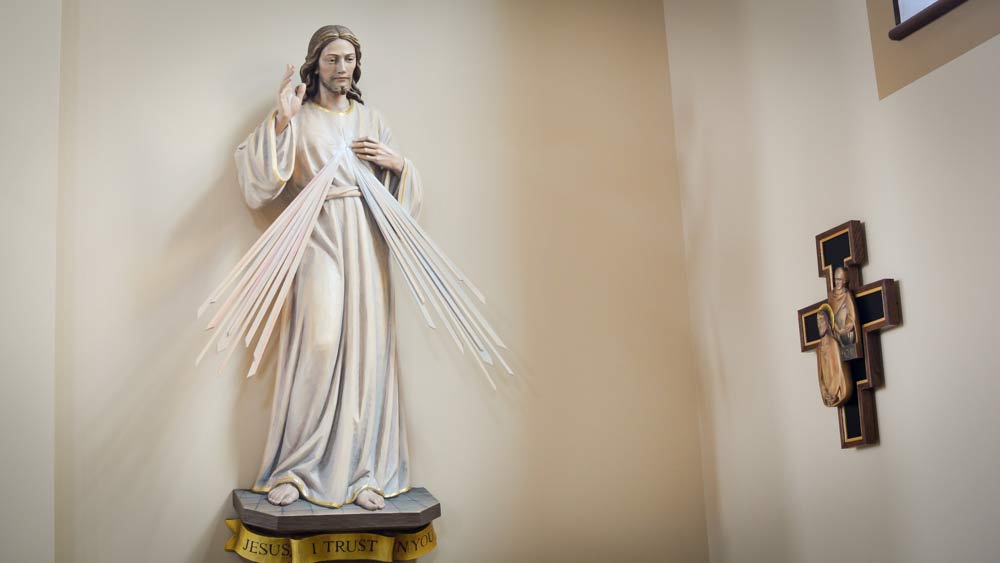
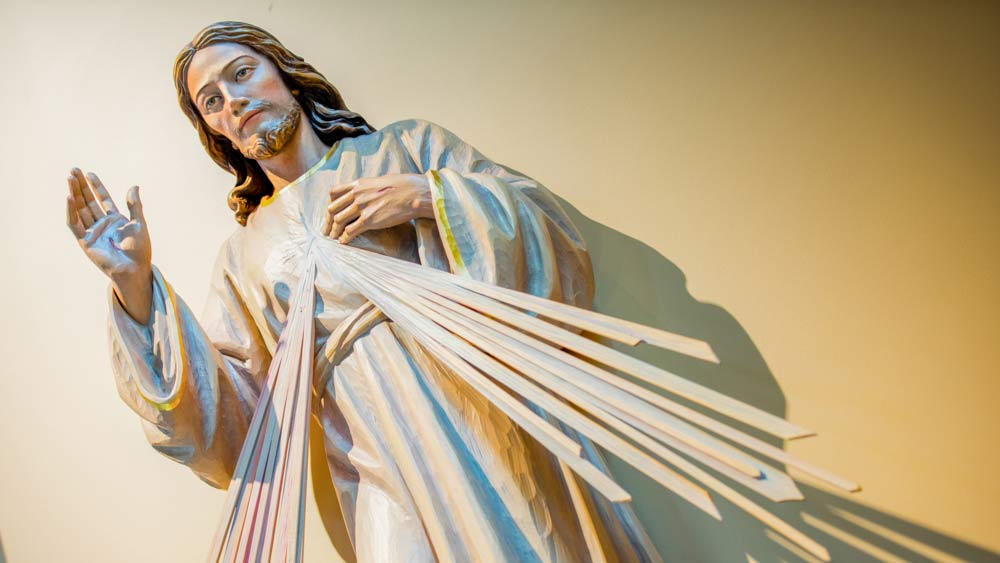
Divine Mercy is central to our community mission and charisms. The purpose of all we do is to glorify God and make known His merciful love in the world. The red and white rays emanating from Christ’s heart in this image signify the blood and water that flowed from Christ’s side as He hung on the cross, and his love and mercy for us. The resurrected Christ, victorious over death, shown in a vision to Saint Faustina, has red and white rays of light emanating from his heart, symbolizing God’s Divine Mercy flowing unceasingly for all mankind.
"My daughter...tell aching mankind to snuggle close to My merciful Heart, and I will fill it with peace. Tell, all people, My daughter, that I am Love and Mercy itself. When a soul approaches Me with trust, I fill it with such an abundance of graces that it cannot contain them within itself, but radiates them to other souls."
-Jesus to St. Faustina, Diary 1074
- 1
- 2
Assumption of Mary Painting : Our Heavenly Hope
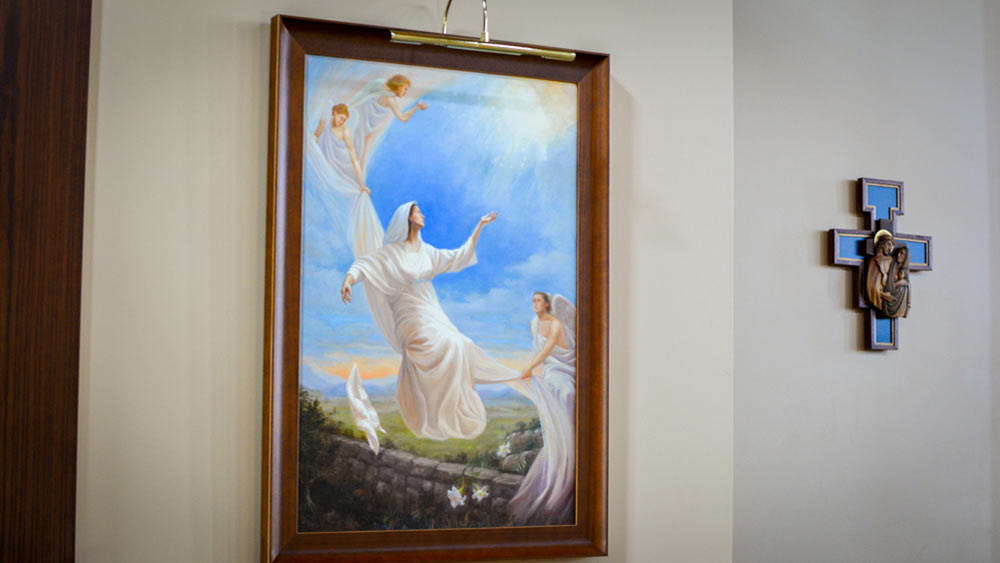
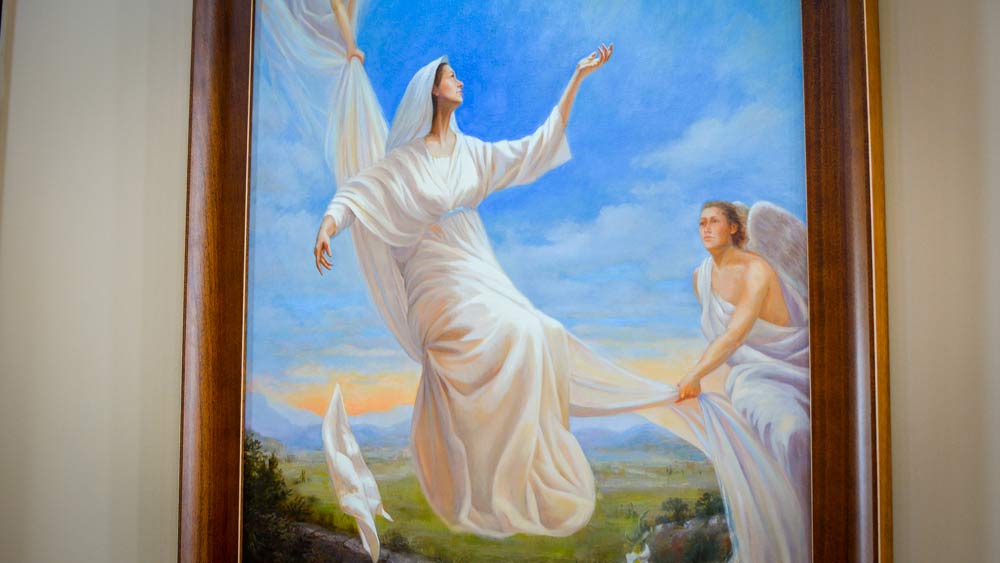
God, in His providential care for our community, ordained the founding of our community to be on the Solemnity of the Assumption, the last day of the Marian Year 1988. By establishing our community on the Assumption, our Merciful Father continually beckons us toward our final home and draws us ever deeper into the mystery of being His children and the daughters of Mary. Our Constitutions describe the beautiful grace it is for us to be her daughters: “In her Assumption, we are filled with hope as we await the fulfillment of eternal life, and confidently look to her as our advocate to intercede for us on our earthly pilgrimage.” All of us are beloved children of our Merciful Father and cared for in a special way by our heavenly Mother during our sojourn here on earth. The painting by Lisa Andrews in our Father of Mercy Chapel highlights this grace and gift of Mary and her Assumption.
Artist: Lisa Andrews
- 1
- 2
"With her face turned toward the heavenly light, away from her earthly trials, her veil, representing earthly obedience and humility, falls away...Having let go of the toils and sorrows of this life and radiant in the light streaming toward her...she reaches toward her heaven...her gaze steady toward her Divine home where the Father, Son and Spirit, the fullness of Trinitarian Love, await her"
-Lisa Andrews, artist
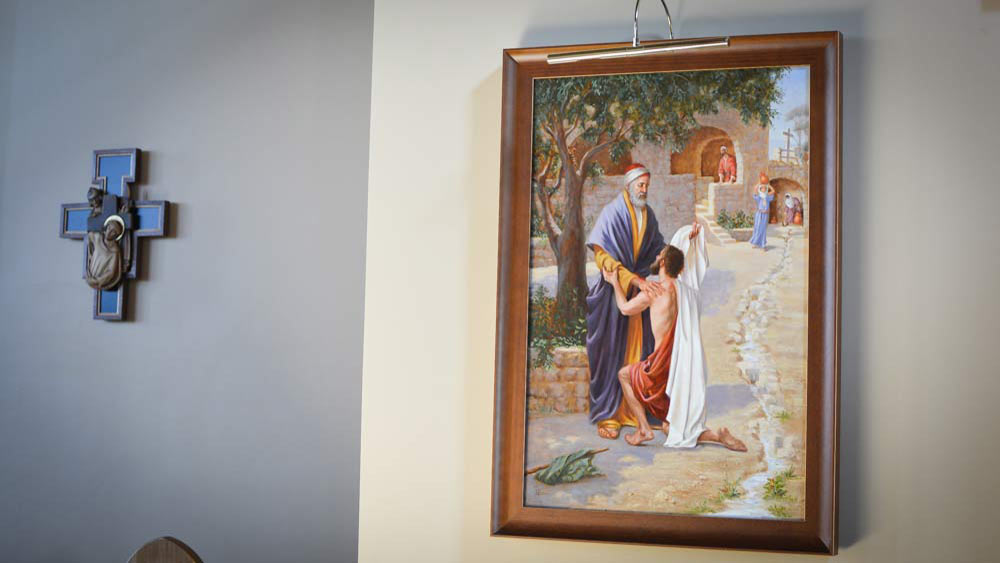
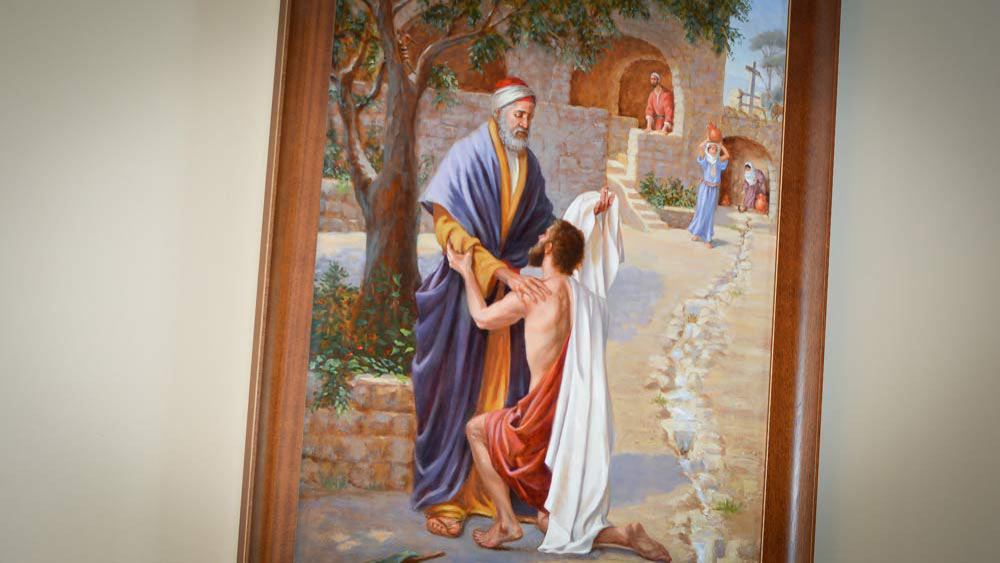
The Prodigal's Return
"Now we must celebrate and rejoice, because your brother was dead and has come back to life again;
he was lost and has been found.” Luke 15:32
Here the familiar parable of the Prodigal Son is represented with a particular emphasis on the powerful reality of conversion and the love of our merciful Father. The son, having fallen to his knees to acknowledge his loss of dignity, has humbly asked for what he deserves: the right to be merely an employee in his own father’s house. The father, in fidelity to his own loving nature, has already extended an affectionate welcome and declared the value of his son restored by calling for a feast and a new garment. In this painting, the Prodigal son is caught between a humble kneeling position and a readiness to stand upright. He steadies himself by grasping the Father’s outstretched arm, accepting the merciful restoration of dignity offered to him. The Father has drawn near to cloak him with the spotless, white garment. The water flowing out from a well nearby also symbolize this renewed life—the waters of the well spill from the base of the cross out into the parched, stony foreground where the son’s remaining worldly goods have been cast aside. The water flows out of the frame into our own lives, inviting us to share in the restorative conversion.
Artist: Lisa Andrews
"There is the story of the Prodigal Son, in which the father, having embraced his son on his return, gives this instruction: “Bring quickly the best robe…” (Luke 15:22). In the Greek text, it says, “the first robe”...the robe in which Adam was created and which he lost after he had grasped at likeness to God. The man who in faith returns home receives back the first “robe”, is clothed again in the mercy and love of God, which are his true beauty."
-Joseph Cardinal Ratzinger
- 1
- 2
